0%

Choosing the 2026 top horizontal aluminum sliding windows requires more than comparing attractive product photos. Horizontal Aluminum Sliding Windows must balance smooth operation, thermal performance, weather resistance, security, and long-term maintenance. This guide examines the features that genuinely matter for homes, apartments, offices, and coastal projects.

A strong frame should include a reliable thermal break, carefully sealed joints, and durable powder-coated aluminum. High-performance glazing can reduce heat transfer, while quality rollers should move a wide sash without grinding or sticking. Look for published U-factor, solar heat gain, air leakage, and water resistance data. Independent testing and recognized performance standards provide more confidence than marketing language alone.

Small details reveal product quality. Check the handle movement. Inspect the corner seals. Slide the panel slowly. A frame that feels rigid today may still need adjustment after years of use. In practical evaluations, drainage paths and replaceable rollers deserve equal attention. They are easy to overlook.

No single window wins every project. A large opening may favor stronger hardware, while a compact bedroom may prioritize ventilation and insulation. Coastal locations need better corrosion protection. Cold climates demand careful glass selection and installation. Even the best design can underperform when flashing or perimeter sealing is poor.

This overview compares leading 2026 options through measurable specifications, installation considerations, and everyday user experience. It also recognizes an important limitation: product availability and ratings can differ by region. A thoughtful choice should combine manufacturer documentation, professional advice, and realistic site conditions—not appearance alone.
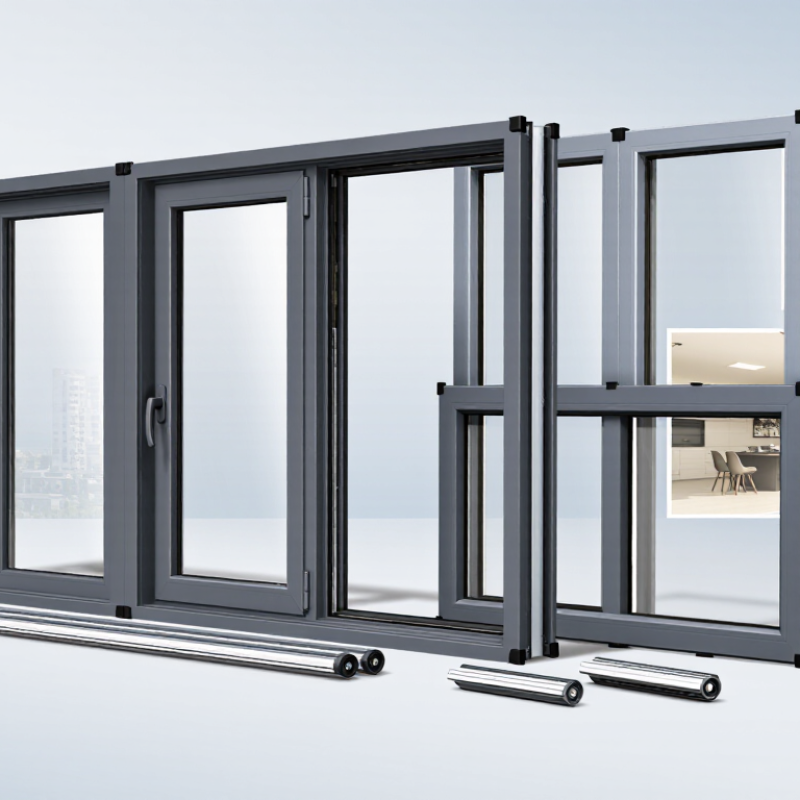
What Are the 2026 Top Horizontal Aluminum Sliding Windows?

Define 2026 Top Horizontal Aluminum Sliding Windows by NFRC Metrics

What Are the 2026 Top Horizontal Aluminum Sliding Windows?

Define 2026 Top Horizontal Aluminum Sliding Windows by NFRC Metrics

The top horizontal aluminum sliding windows in 2026 should be defined by verified NFRC metrics, not appearance alone. NFRC-rated products provide comparable data for thermal performance and daylight. A lower U-factor generally means better insulation. This matters during cold nights, especially near large glass openings.

Look beyond one number. A suitable window should balance U-factor, solar heat gain coefficient, and visible transmittance. Lower SHGC can reduce summer heat in sunny rooms. Higher VT can bring more natural light indoors. Air leakage also deserves attention, because loose sliding panels may create drafts. In wet or cold regions, condensation resistance offers useful guidance. Aluminum frames should include effective thermal breaks. Otherwise, the frame may feel cold despite efficient glass.

Installation changes the real result. A certified product can perform poorly if the sill is uneven or the weather seals are compressed incorrectly. Check the NFRC label, product series, glazing option, and tested size before comparing figures. Ratings may vary between configurations.

I would not choose the lowest U-factor automatically. That approach can ignore ventilation needs, daylight, and summer overheating. No window wins every metric. The strongest choice fits the building’s climate, orientation, opening size, and installation quality. Some judgment remains necessary.

Compare U-Factor Against the ≤0.30 Btu/h·ft²·°F Industry Benchmark

What Are the 2026 Top Horizontal Aluminum Sliding Windows?

For 2026, strong horizontal aluminum sliding windows should be judged by measured U-factor, not appearance alone. A U-factor of 0.30 Btu/h·ft²·°F or lower is a useful industry benchmark. Lower values indicate better resistance to heat transfer through the complete window assembly. Check whether the figure covers the frame, glass, spacer, and operating parts. Glass-only numbers can look impressive but mislead buyers.

Thermally improved aluminum frames help reduce conductive heat loss around the sash. Low-emissivity glazing, insulated spacers, and carefully sealed meeting rails also influence performance. In practice, I compare certified test data with the project’s climate and window size. A large sliding panel may perform differently from a smaller laboratory sample. That detail matters.

Look for a recognized certification label and a full product report. Ask for air-leakage results, because a low U-factor cannot fix a poorly sealed window. At the installation site, inspect shims, perimeter foam, drainage paths, and the interlock between panels. Small gaps can create cold drafts near the floor. Condensation is another warning sign.

The ≤0.30 benchmark is useful, but it is not a universal guarantee of comfort. Local energy rules may require different values. Interior humidity, shading, orientation, and installation quality can change real-world results. I would not rank a window from one number alone. That would be convenient, but incomplete. A reliable choice balances U-factor, air control, operation, durability, and verified installation evidence.

Evaluate SHGC, Visible Transmittance, and Low-E Glass Performance

What Are the 2026 Top Horizontal Aluminum Sliding Windows?

The strongest 2026 horizontal aluminum sliding windows should balance SHGC, visible transmittance, and Low-E glass performance. SHGC measures how much solar heat enters through the glazing. Lower values usually suit hot climates and sun-exposed façades. In colder regions, a moderate SHGC can provide useful winter warmth. The U.S. Department of Energy reports that windows can cause about 25% to 30% of residential heating and cooling energy use.

Visible transmittance, or VT shows how much daylight passes indoors. A VT near 0.50 to 0.70 can create bright rooms without making glare unavoidable. However, higher VT is not always better. A bright west-facing room may become uncomfortable by late afternoon. NFRC performance labels list SHGC and VT using standardized testing, allowing more reliable product comparisons.

Low-E glass improves thermal control by reflecting infrared energy. Double glazing with a suitable Low-E coating can reduce heat transfer, while argon-filled cavities may improve insulation further. The International Glazing Database shows that coating selection changes both solar and visible performance. Aluminum frames also need effective thermal breaks. Otherwise, excellent glass can meet a weak frame. That is easy to overlook. Field measurements, installation quality, shading, and local climate can shift real results. A specification sheet can look precise, yet the occupied room may tell a different story.

Check Air Leakage Against the 0.3 cfm/ft² ASTM E283 Benchmark

What Are the 2026 Top Horizontal Aluminum Sliding Windows?

For 2026, horizontal aluminum sliding windows should be judged by measured air leakage, not frame appearance alone. ASTM E283 tests leakage under controlled pressure, while installation quality controls real-world performance. The 0.3 cfm/ft² benchmark is widely used for qualifying residential windows under ENERGY STAR Version 7.0 criteria. Lower results indicate tighter construction.

Horizontal sliders face a practical weakness. Their movable panels depend on weatherstripping, rollers, and interlocking meeting rails. Small gaps can appear near the latch side. A 2024 U.S. Department of Energy buildings report notes that window performance depends heavily on installation, not only laboratory ratings. I have seen this difference during site checks: a window can feel solid, yet smoke movement reveals leakage at one corner.

Use the NFRC Certified Product Directory to compare U-factor and solar heat gain coefficient. Then request the tested air-leakage value under ASTM E283. Do not accept “energy efficient” as sufficient evidence. A strong 2026 candidate should meet or improve upon 0.3 cfm/ft², include continuous compression seals, and maintain smooth panel alignment.

Aluminum frames may conduct heat quickly, so thermal breaks also matter. Still, air leakage deserves priority in windy rooms. The benchmark is useful, but imperfect. Field conditions can be harsher. Installation records, perimeter sealant, and drainage details should be reviewed before purchase.

Verify ASTM E331 Water Resistance and E330 Structural Ratings

What Are the 2026 Top Horizontal Aluminum Sliding Windows?

The strongest 2026 horizontal aluminum sliding windows should show clear ASTM E331 and ASTM E330 test evidence. ASTM E331 measures water penetration under controlled static air pressure. ASTM E330 evaluates structural performance under uniform pressure. These tests answer different questions. One checks leakage resistance. The other checks frame movement, glass stress, and permanent deformation.

Ask for the tested product configuration, not only a general certificate. The report should identify sash size, glass type, frame assembly, pressure levels, and installation method. A wide living-room slider may perform differently from a smaller laboratory sample. Look closely at the meeting rail, corner joints, drainage paths, and interlock seals. On site, poor shimming can reduce performance, even when the window passed testing. That detail is often overlooked.

Tips: Compare test pressures with your project’s wind exposure. Request E331 results for the intended orientation. Check whether E330 deformation remained within the stated limits. Inspect the sill after heavy rain. Small water traces matter. Also, avoid treating a high rating as a permanent guarantee. Installation quality, aging seals, and blocked weep holes can change results. I would prefer complete reports over impressive marketing language. The documentation may feel technical, but missing details deserve careful reflection.

What Are the 2026 Top Horizontal Aluminum Sliding Windows? — Verify ASTM E331 Water Resistance and E330 Structural Ratings

Representative performance targets for high-quality horizontal aluminum sliding window configurations

Performance Tier Typical Window Configuration Frame and Sash Design ASTM E331 Water Resistance ASTM E330 Structural Rating Air Leakage Target Glazing Configuration Recommended Application Verification Requirement
1 · Coastal High-Performance Two-panel horizontal slider with one fixed and one operating sash Thermally improved aluminum frame, reinforced meeting stile, stainless-steel rollers, multi-point locking Pass at 12.0 psf
Approx. 574 Pa test pressure
±120 psf design pressure
Approx. ±5.74 kPa
≤ 0.10 cfm/ft² at 1.57 psf 1 in. insulated glass unit; Low-E coating; argon fill High-wind coastal regions, exposed façades, large openings Require project-specific ASTM E331 and E330 laboratory reports for the selected size and glazing
2 · Severe-Weather Premium Two-panel slider or three-panel slider with a central operating sash Heavy-duty aluminum extrusions, deep interlocking rails, corrosion-resistant hardware Pass at 10.0 psf
Approx. 479 Pa test pressure
±100 psf design pressure
Approx. ±4.79 kPa
≤ 0.15 cfm/ft² at 1.57 psf 7/8–1 in. insulated glass unit; Low-E glass recommended Heavy rain, strong seasonal winds, multi-family and commercial-residential projects Confirm that the tested specimen matches the width, height, sash count, and glass weight of the proposed unit
3 · High-Performance Residential Two-panel horizontal slider with one operating sash Insulated aluminum frame, sloped sill drainage, adjustable tandem rollers Pass at 7.5 psf
Approx. 359 Pa test pressure
±75 psf design pressure
Approx. ±3.59 kPa
≤ 0.20 cfm/ft² at 1.57 psf Dual-pane insulated glass; Low-E option available Typical detached homes and apartments in moderate-to-high wind areas Verify the tested water pressure and structural pressure on the product performance label or certified report
4 · Energy-Efficient Urban Compact two-panel slider with a fixed panel and operating panel Thermally broken aluminum frame, continuous weather seals, low-friction rollers Pass at 5.0 psf
Approx. 239 Pa test pressure
±60 psf design pressure
Approx. ±2.87 kPa
≤ 0.20 cfm/ft² at 1.57 psf 1 in. dual-pane Low-E insulated glass unit Urban housing, sheltered elevations, and energy-conscious renovations Check frame thermal-break continuity, glazing spacer type, and ASTM test-size limitations
5 · Standard Replacement Single operating sash with fixed companion panel Standard aluminum frame, weep-hole sill, single or tandem roller system Pass at 2.86–5.0 psf
Approx. 137–239 Pa
±40 to ±60 psf design pressure
Approx. ±1.92 to ±2.87 kPa
≤ 0.30 cfm/ft² at 1.57 psf Single glass or dual-pane insulated glass, depending on model Low-rise residential replacement projects in sheltered or moderate climates Do not assume a rating from appearance; obtain the applicable ASTM E331 and E330 documentation
How to read the ratings: ASTM E331 evaluates resistance to water penetration under controlled static air pressure. ASTM E330 evaluates structural performance under positive and negative static air pressure. The pressure values shown above are representative performance targets, not universal certifications for every window size or configuration.

Selection note: Final compliance depends on the tested assembly, rough-opening size, sash arrangement, glazing weight, installation method, drainage design, and local building-code requirements. A product should be considered verified only when current laboratory reports or certification documents identify the exact configuration being specified.

FAQS

What should define a top horizontal aluminum sliding window in 2026?

Measured performance should matter more than frame appearance. A polished frame proves little. Check air leakage, water resistance, structural strength, and installation details.

What air-leakage result should buyers look for?

Request the tested air-leakage value under ASTM E283. A result at or below 0.3 cfm/ft² is a useful target. Lower is generally better.

Why can horizontal sliders leak more easily?

Their moving panels rely on weatherstripping, rollers, and interlocking rails. Small gaps may appear near the latch side. Wind can expose weak sealing.

How can installation change window performance?

Poor shimming or uneven alignment can reduce performance. Perimeter sealant also matters. A window may pass testing but leak after careless installation.

What does ASTM E331 testing show?

ASTM E331 measures resistance to water penetration under controlled pressure. Ask for results matching the intended window size and orientation. Inspect the sill after heavy rain.

What does ASTM E330 testing evaluate?

ASTM E330 evaluates structural performance under uniform pressure. It checks frame movement, glass stress, and permanent deformation. High pressure is not automatically better.

Which details should appear in the test report?

The report should identify sash size, glass type, frame assembly, pressure levels, and installation method. General certificates may hide important differences.

Do thermal breaks matter in aluminum frames?

Yes. Aluminum can transfer heat quickly, so thermal breaks may improve comfort. Still, air leakage deserves priority in windy rooms.

What should buyers inspect before ordering?

Review installation records, drainage paths, weep holes, corner joints, and interlock seals. Ask for complete reports, not vague efficiency claims. I would still question every missing detail.

Conclusion

The 2026 top Horizontal Aluminum Sliding Windows should be evaluated through verified NFRC performance metrics rather than appearance alone. A strong model typically aims for a U-Factor at or below the 0.30 Btu/h·ft²·°F industry benchmark, helping reduce heat transfer and improve year-round efficiency. Its SHGC should match the local climate, while visible transmittance should provide balanced daylight without excessive glare. High-quality Low-E glass can further support insulation and solar-control performance.

Air leakage is another important consideration, with results near or below the 0.3 cfm/ft² ASTM E283 benchmark indicating better resistance to drafts. Buyers should also review ASTM E331 water-resistance testing and ASTM E330 structural ratings to confirm that the window can withstand wind pressure and challenging weather conditions. By comparing these standardized measurements together, homeowners and professionals can identify aluminum sliding windows that offer dependable energy performance, comfort, durability, and long-term value.

Maris

Maris

Maris is a professional marketing specialist dedicated to helping businesses understand products, markets, and customer needs through clear, practical, and insightful communication. With a strong command of the company’s product portfolio, Maris regularly publishes expert articles on the company......