0%

China’s aluminum window sector is becoming more specification-driven, especially in residential towers, passive homes, and renovated urban apartments. Grand View Research estimated the global aluminum doors and windows market at approximately USD 65 billion in 2023, with continued growth expected through 2030. Mordor Intelligence also forecasts steady expansion, although its market boundaries and figures differ. That difference matters. Market reports are not perfectly comparable.

This guide introduces China’s Top 10 Tilt and Turn Aluminum Windows Manufacturers through a practical procurement lens. It considers factory experience, export records, thermal-break design, air-tightness, water resistance, hardware quality, and testing documentation. A strong supplier should explain U-values, glazing options, powder-coating standards, and installation tolerances clearly. Product photographs are not enough. Ask for test reports.

Building-science authority Joseph Lstiburek has often stated, “Windows are holes in walls.” The phrase sounds simple, but it remains technically important. A beautifully fabricated sash can still fail when the frame, gasket, drainage path, and surrounding wall are poorly coordinated. Tilt and Turn Aluminum Windows combine inward tilting ventilation with full inward opening, offering useful control in compact rooms. Yet they require accurate hardware adjustment and careful site installation.

The manufacturers below are not ranked by advertising visibility alone. Their capabilities may vary by project, region, and customization level. Some factories excel at large-scale production, while others perform better with complex glazing or premium finishes. Buyers should verify current certifications, lead times, warranty terms, and sample performance before signing a contract. A shortlist helps. It does not replace technical due diligence.
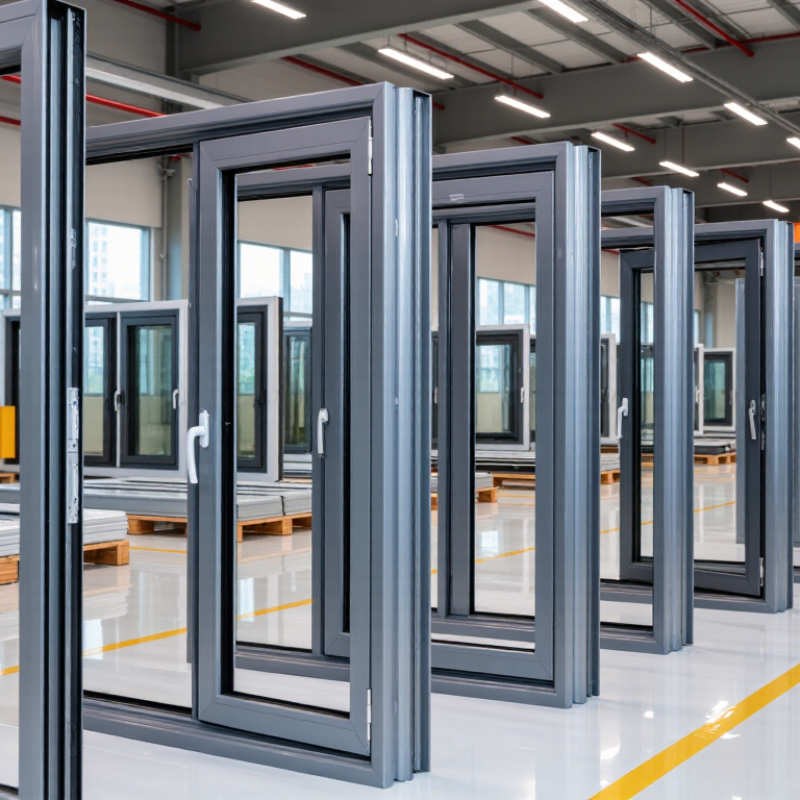
China Top 10 Tilt and Turn Aluminum Windows Manufacturers

What Are Tilt and Turn Aluminum Windows?

Tilt and turn aluminum windows combine two opening movements in one frame.

Turn the handle sideways, and the sash opens inward like a casement window. Turn it upward, and the top tilts inward for controlled ventilation.

This dual action is practical in apartments, offices, and high-rise homes. Tilt ventilation lets warm air escape while limiting the opening near children or pets.

The inward turn provides a wide clear space for cleaning and emergency airflow. Aluminum frames add strength, resist warping, and support large glass panels.

Thermal breaks reduce heat transfer through the metal, although poor installation can still weaken performance.

Look closely at the hardware.

A reliable window should move smoothly without scraping or sudden resistance. Multi-point locks should engage evenly around the sash.

Gaskets need firm contact, especially at the lower corners where rainwater may collect. In my experience, accurate factory measurements matter as much as the profile itself.

A small installation gap can cause drafts, noise, or difficult operation. This is often overlooked.

When evaluating Chinese manufacturers, request test data for air leakage, water tightness, wind resistance, and thermal insulation.

Ask how profiles, glass, hardware, and drainage channels are inspected. Specifications can look impressive. Real performance depends on assembly and site conditions. Even the best design needs adjustment after installation, because buildings rarely remain perfectly square.

How to Evaluate China’s Tilt and Turn Window Manufacturers

China Top 10 Tilt and Turn Aluminum Windows Manufacturers

How to Evaluate China’s Tilt and Turn Window Manufacturers

Choosing a tilt and turn window manufacturer requires more than comparing online prices. Request factory videos, material certificates, and recent project references. During a factory visit, inspect aluminum profiles, thermal breaks, corner joints, and drainage channels. Small details matter. A clean assembly line does not always prove consistent quality.

Ask how the manufacturer controls profile thickness, powder coating, glass sealing, and hardware installation. Confirm U-values, air tightness, water resistance, and wind-load results through independent test reports. Hardware should operate smoothly without excessive force. Request samples with the exact glass, color, and opening size for your project. A polished sample can still hide weak production controls. I have seen attractive windows fail because the drainage path was poorly designed.

Tips: Compare at least three quotations, but never compare price alone. Check warranty terms, replacement procedures, packaging quality, and export experience. Ask for production photos during your order. Clear drawings reduce mistakes. Also test communication speed and technical understanding. A manufacturer that avoids precise answers may create delays later. Even experienced buyers can overlook installation tolerance, so review site conditions before final approval.

Top 10 China-Based Tilt and Turn Aluminum Window Manufacturers

China Top 10 Tilt and Turn Aluminum Windows Manufacturers

This review examines ten China-based tilt and turn aluminum window manufacturers. Selection focuses on thermal breaks, hardware testing, air tightness, drainage design, and export experience. These details matter because the U.S. Department of Energy estimates that windows may cause 25%–30% of residential heating and cooling energy use. A poorly sealed frame becomes noticeable beside a cold window reveal.

The evaluation also considers factory capacity, profile quality, glass options, installation guidance, and documented compliance. According to Grand View Research, the global aluminum windows market continues expanding, supported by urban construction and demand for durable, low-maintenance systems. China-based suppliers often provide flexible fabrication, including narrow sightlines, oversized panels, and custom powder-coated finishes. However, lower prices do not always indicate better value.

A ranking is never perfect. Public factory data can be incomplete, and product performance may change between projects. Buyers should request recent test reports, sample corner joints, warranty terms, and independent inspection records. Tilt and turn systems need accurate hardware alignment; a small tolerance error can affect ventilation and locking. Professional experience suggests checking drainage after simulated rain, not only reviewing catalog photographs. Some manufacturers appear strong online but provide limited evidence of long-term field performance. That gap deserves attention.

Key Products, Technologies, and Customization Options

China’s top ten tilt and turn aluminum window manufacturers typically compete through product depth, testing discipline, and flexible customization. Their core ranges include inward-opening tilt and turn windows, fixed units, balcony systems, and slim-frame designs. Many use thermally broken aluminum profiles to reduce heat transfer across the frame. This matters in cold winters and hot, humid summers.

High-performance models often combine multi-chamber thermal barriers, Low-E insulated glass, argon filling, and EPDM gaskets. Multi-point locking improves compression and security. Stainless steel friction stays support smooth movement during ventilation. Powder coating and anodized finishes provide durable color options, while CNC machining helps maintain accurate joints. Some factories also use automated cutting, digital quality checks, and water-tightness testing. Testing should follow the project’s required standards, not a generic sales sheet.

Customization is where real project experience becomes valuable. Buyers can specify sash dimensions, glass thickness, hardware colors, drainage details, screens, acoustic glass, and special opening limits. Oversized sashes need careful weight calculations. Otherwise, operation may become stiff over time. A narrow frame may look elegant, but it can reduce structural strength or thermal performance. That trade-off deserves discussion.

Manufacturers can also prepare shop drawings, sample corners, finish cards, and performance data before production. These details improve reliability on site. Still, installation quality remains easy to underestimate. Even a well-tested window may leak if the opening is poorly prepared. Careful measurement, compatible sealants, and documented inspection are essential. No catalog is perfect. Ask for evidence, not promises.

How to Select the Right Manufacturer for Your Project

Selecting among China’s top tilt and turn aluminum window manufacturers requires more than comparing catalog prices. Start with tested performance. The U.S. Department of Energy reports that windows can account for 25–30% of residential heating and cooling energy use. Therefore, request verified U-values, solar heat gain coefficients, air leakage, water resistance, and wind-load results. Ask whether testing followed recognized standards, such as EN 14351-1, AAMA/FGIA procedures, or applicable national requirements.

Look closely at the factory’s process. A dependable manufacturer should show aluminum alloy specifications, thermal-break details, powder-coating thickness, hardware sources, and inspection records. Request a sample corner, not only attractive photographs. Check gasket compression, hinge movement, drainage holes, and the locking handle. These small details often reveal production discipline. The International Energy Agency has repeatedly identified building efficiency as a major route to reducing energy demand, making thermal design a practical purchasing issue, not decoration.

Project evidence matters. Ask for references involving similar climate, window sizes, glazing weights, and installation conditions. Confirm production capacity, packaging methods, replacement-part support, and a written schedule with inspection checkpoints. A manufacturer offering every specification instantly may deserve more questions, not fewer. In my experience, the weakest assumption is treating a high-performance window as a complete solution; poor installation can undermine excellent factory testing. Require shop drawings, installation guidance, and pre-shipment quality records before approving mass production. Price still matters, but lifecycle performance should decide the final shortlist.

FAQS

What are tilt and turn aluminum windows?

They combine two opening movements in one frame. Turn the handle sideways for a wide inward opening. Turn it upward for gentle top ventilation.

Why is the tilt function useful?

The top opens inward slightly, allowing warm air to escape. It provides ventilation with a smaller opening. This can help around children or pets.

What advantages do aluminum frames provide?

Aluminum offers strength and resists warping. It can support large glass panels. Thermal breaks reduce heat transfer through the frame. They are not magic.

What hardware details should buyers inspect?

The handle should move smoothly without scraping. Multi-point locks should engage evenly around the sash. Gaskets need firm contact, especially near lower corners. Poor contact may invite drafts or rain.

Which performance tests should a manufacturer provide?

Request verified results for air leakage, water tightness, wind resistance, and thermal insulation. Check the testing method and project relevance. A glossy specification sheet proves little alone.

How can buyers evaluate factory quality?

Inspect profile thickness, thermal breaks, corner joints, drainage channels, and glass sealing. Request a physical corner sample. Photographs can hide weak assembly.

What project information should be confirmed before ordering?

Confirm glass type, color, opening size, glazing weight, and climate conditions. Request clear shop drawings and production checkpoints. Similar project references are useful. But references can still be selective.

Why is installation quality so important?

Incorrect gaps can cause drafts, noise, or difficult operation. Poor drainage may leave rainwater near the lower frame. Even tested windows need adjustment after installation. Buildings are rarely perfectly square.

Conclusion

This guide presents a practical overview of Tilt and Turn Aluminum Windows, explaining how their dual-opening design combines secure ventilation, easy cleaning, weather resistance, and modern architectural appeal. It also outlines the key factors for evaluating manufacturers in China, including production capabilities, aluminum quality, thermal-break technology, hardware performance, testing standards, customization services, lead times, and after-sales support.

The article introduces ten China-based manufacturers as examples of suppliers serving residential, commercial, and architectural projects, while focusing on product categories, glazing options, surface finishes, energy-efficiency solutions, and project-specific designs rather than brand promotion. Finally, it provides a clear framework for selecting the right partner by comparing technical requirements, certifications, communication, quality control, pricing, minimum order quantities, packaging, delivery capacity, and long-term service. This approach helps buyers make informed decisions and choose windows that balance performance, appearance, durability, and overall project value.

Elara

Elara

Elara is a dedicated marketing professional with a strong understanding of product strategy, customer needs, and market trends. As a regular contributor to the company’s professional blog, Elara shares clear, practical, and insightful articles that help readers better understand the products,......