Why Choose Low-E Argon Filled Glass Windows?
Windows quietly influence indoor comfort, energy bills, and building durability. The U.S. Department of Energy reports that heat gain and loss through windows can represent about 25% of household heating and cooling energy use. That figure makes window selection more than a cosmetic decision. Low-E Argon Filled Glass Windows combine a microscopic low-emissivity coating with argon gas between sealed panes. The coating reflects much of the infrared energy, while argon limits heat movement through the cavity.
The effect is tangible. A winter window feels less cold near the interior surface. Summer sunlight becomes less aggressive on timber floors and fabric sofas. ENERGY STAR and National Fenestration Rating Council guidance emphasize checking U-factor, solar heat gain coefficient, visible transmittance, and air leakage. These ratings matter more than attractive product language. A low U-factor usually indicates better insulation, but climate and orientation still change the best choice.
“Windows are the weakest link in the building envelope,” said Stephen Selkowitz, a former Lawrence Berkeley National Laboratory building-efficiency expert. His observation remains relevant, although it needs context. Better glass cannot correct poor installation, damaged seals, or unsuitable shading. The International Energy Agency also identifies building-envelope performance as a major pathway for reducing operational energy demand. That does not guarantee dramatic savings in every home. A shaded north-facing window may deliver different results from a large, sun-exposed west-facing unit. Careful design wins. The right specification should match local weather, frame material, installation quality, and occupant expectations.
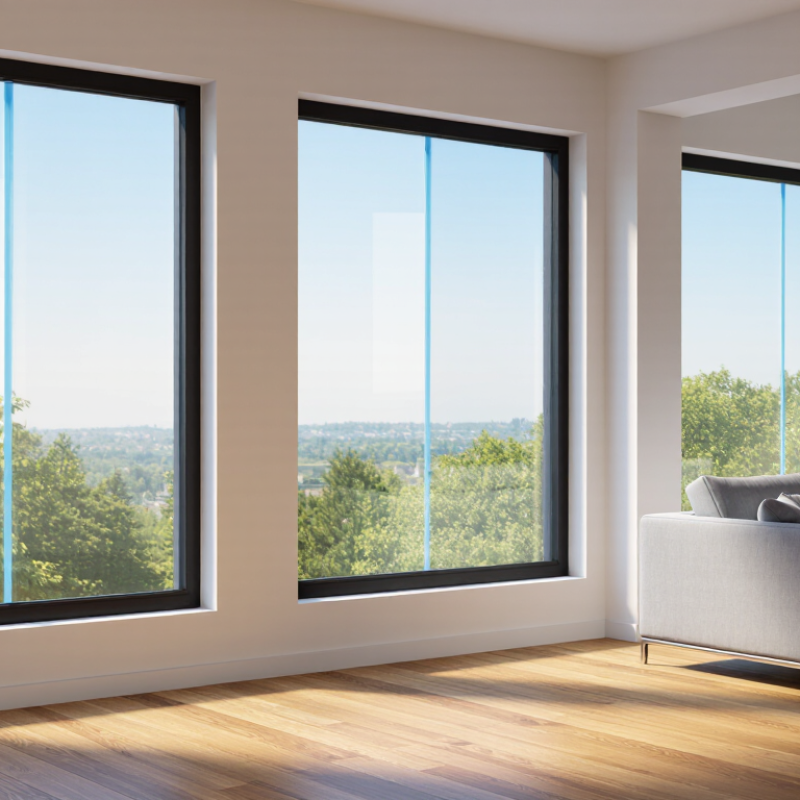
What Low-E Argon-Filled Glass Windows Are
Low-E argon-filled glass windows are insulating glass units with two or more panes. A low-emissivity coating reflects radiant heat while allowing daylight to enter. Argon fills the sealed space between panes, replacing ordinary air with a gas that transfers less heat. The National Fenestration Rating Council evaluates these systems through U-factor and solar heat gain coefficient ratings. U-factor measures heat flow, while SHGC shows how much solar heat enters. These ratings explain performance more clearly than the words “energy efficient.”
The U.S. Department of Energy reports that windows can account for about 25–30% of residential heating and cooling energy use. Properly selected low-E glass can reduce this burden, especially when its SHGC matches the local climate. In a cold region, lower heat loss may matter most. In a sunny region, solar control can prevent a warm living room and faded flooring. Small details matter: warm-edge spacers, durable seals, and accurate frame installation. A gap near the sill can weaken the whole system.
Argon is not a miracle gas. Its benefit declines if the unit loses its seal, and performance varies with pane spacing and coating position. That limitation deserves attention. NFRC-certified ratings help compare products under consistent conditions, but real buildings remain imperfect. Orientation, shading, curtains, and installation quality can change the result. A window may carry an excellent rating yet perform poorly when fitted carelessly.
Why Choose Low-E Argon-Filled Glass Windows? — What Low-E Argon-Filled Glass Windows Are
| Data Dimension | Low-E Argon-Filled Glass Windows | What It Means for Homeowners |
|---|---|---|
| Definition | Insulating glass units with two or more panes, a low-emissivity coating, and argon gas sealed between the panes. | The glass system is designed to reduce heat transfer through the window. |
| Typical construction | Usually double-pane glass with a sealed air space of approximately 12–16 mm; triple-pane units use two sealed spaces. | Wider or multiple gas spaces can improve insulation when the unit is properly designed and sealed. |
| Argon concentration | Newly manufactured units are commonly filled to about 90% argon, with the balance mainly being residual air. | Argon is denser and less thermally conductive than air, helping slow heat movement through the cavity. |
| Low-E coating function | A microscopically thin metallic or metal-oxide coating reflects long-wave infrared heat while allowing selected visible light to pass through. | More indoor heat can remain indoors during cold weather, while unwanted solar heat can be limited in warm climates. |
| Typical center-of-glass U-factor | Approximately 0.25–0.30 Btu/h·ft²·°F for many double-pane low-E argon configurations; exact values vary by coating, spacing, and glass thickness. | A lower U-factor indicates better resistance to heat loss through the glass center. |
| Whole-window U-factor | Common residential double-pane products may fall roughly between 0.25 and 0.40 Btu/h·ft²·°F, depending on the frame, spacer, size, and operating style. | Whole-window ratings are more useful than glass-only ratings because the frame and edge seal also affect performance. |
| Solar Heat Gain Coefficient (SHGC) | Typical low-E selections range from approximately 0.25 to 0.70, depending on whether the coating is optimized for solar control or passive solar heat gain. | Lower SHGC can reduce summer cooling loads; higher SHGC can admit more useful winter sunlight in suitable climates. |
| Visible Light Transmittance (VLT) | Many residential low-E glass options provide approximately 40%–75% visible light transmittance. | Higher VLT generally provides a brighter interior, while lower VLT may provide stronger solar control or glare reduction. |
| Winter comfort | The interior glass surface is generally warmer than that of basic clear double glazing under the same conditions. | Occupants may experience less radiant chill near the window and more even room temperatures. |
| Condensation control | Improved insulation can raise the interior glass temperature and reduce the likelihood of indoor condensation, but it cannot eliminate condensation in all conditions. | Indoor humidity, ventilation, room temperature, window installation, and edge-seal performance remain important. |
| Summer performance | Solar-control low-E coatings can reflect part of the sun’s infrared energy while maintaining useful daylight. | Reduced solar heat entering through the glazing can help lower air-conditioning demand, especially on sun-exposed elevations. |
| Acoustic performance | Low-E coating and argon primarily improve thermal performance; sound reduction depends more on pane thickness, laminated glass, air-space width, and frame design. | Do not select a window for noise control based on the argon fill alone. |
| Durability considerations | Argon is inert and does not normally react with the glass. Performance depends on the spacer, seal quality, manufacturing process, and installation. | A failed seal may allow moisture to enter or gas to escape, causing fogging and reduced insulating performance. |
| Best climate considerations | The most suitable low-E coating depends on heating demand, cooling demand, window orientation, shading, and local energy requirements. | A climate-appropriate SHGC and U-factor are more important than choosing the same specification for every location. |
| Important specification checks | Review whole-window U-factor, SHGC, VLT, air leakage, condensation resistance, frame material, spacer type, and installation details. | Comparing complete, independently tested window ratings helps prevent misleading glass-only comparisons. |
Note: Performance ranges are indicative values for residential glazing. Actual results vary according to glass composition, coating type, cavity width, frame design, window size, orientation, climate, and installation quality.
FAQS
They use two or more panes with a low-emissivity coating. Argon fills the sealed space between panes. The coating reflects radiant heat while allowing daylight inside.
The glass slows heat movement through the window. Low-E coatings can reduce window energy loss by about 30% to 50%. Actual savings vary.
U-factor measures heat flow through the window. A lower value usually means better insulation. Solar heat gain coefficient shows how much sunlight becomes indoor heat.
Not always. A sunny south-facing room may need stronger solar control. A shaded room may benefit more from heat retention. Room use matters, too.
No. It is not magic. Argon slows heat transfer, but seal failure reduces its benefit. Fogging between panes may signal lost gas or moisture entry.
The opening should be square, dry, and properly drained. Installers must protect the edge seal and position the coating correctly. A small sill gap can create drafts.
Clean the glass with mild soap. Keep drainage holes clear of dust, paint, and insects. Inspect frames twice each year. Check for fogging, cracked sealant, or drafts.
About 20 years is a practical reference point. Climate, installation, building movement, and seal quality change that estimate. It is useful, but not absolute.
Request tested U-factor and solar heat gain values. Inspect rough openings and existing water stains. Review installation instructions, independent reports, and warranty limits. Impressive numbers alone are not enough.
Conclusion
Low-E Argon Filled Glass Windows combine a thin low-emissivity coating with argon gas sealed between two or more panes of glass. The coating helps reflect heat back toward its source, while argon provides better insulation than ordinary air. Together, these features can reduce heat loss in winter, limit unwanted heat gain in summer, and support more stable indoor temperatures. They may also improve comfort near windows, reduce condensation, and help block a significant amount of UV radiation that can fade furniture, flooring, and fabrics.
When choosing these windows, consider the local climate, glass configuration, coating type, frame material, energy ratings, and overall installation quality. Proper professional installation is essential for maintaining the insulating seal and achieving expected performance. Routine maintenance generally involves cleaning the glass and checking for visible seal or frame damage. With suitable materials, careful installation, and normal maintenance, Low-E Argon Filled Glass Windows can provide reliable energy savings, improved indoor comfort, and long service life.