Engineered Security Doors & High-Performance Window Systems
Explore our CE-certified architectural product line, custom-fabricated to millimeter precision with European hardware, advanced thermal breaks, and structural safety ratings.

Soundproof Energy Saving Swing Double/Triple Glazed Casement Windows
- 78mm Thermal Break Profile
- Acoustic Rating: Up to 42 dB
- German GU Multi-point Locking

Modern Soundproof UPVC & Hybrid Casement Windows for Luxury Villas
- Steel-reinforced Profile Chamber
- Low-E Double Glazed Argon IGU
- Weather Resistance & UV Proof

Slim Frame Architectural Minimalist Swing Aluminum Casement Window
- Ultra-Slim 25mm Visible Sightline
- Stainless Steel Security Mesh
- High structural wind load resistance

Heavy Duty Soundproof Double Glazed Aluminium Casement Windows
- 2.0mm Extruded Profile Wall
- Tempered Safety Glass IGUs
- Concealed Hinge Security Mechanism

Heavy Duty 86 Series Large Section Frame Window for Villa & Estate
- 86mm Frame Depth & Large Section
- Polyamide PA66 Thermal Barrier
- Heavy load-bearing capacity

Bespoke Energy Efficient Soundproof Double Glazed Aluminum System
- Tailored Opening Dimensions
- Triple EPDM Gasket System
- U-Factor ≤ 0.26 BTU/h·ft²·°F

Double Glazed Aluminum Alloy Swing Thermal Break System Door/Window
- High Tensile T6 Aluminum Alloy
- Integrated Security Deadbolts
- Corrosion Resistant Anodized Finish

Triple Glaze European Tilt & Turn Security Fenestration System
- Dual Opening Action (Tilt & Turn)
- Anti-Prying Corner Locking Points
- Retractable Stainless Fly Screen
Technical Whitepaper: Engineering Criteria for CE Certified Security Doors
When specifying high-security access control points and fenestration envelopes for modern residential estates, commercial hubs, and luxury multi-family developments, security doors represent the primary physical defense against forced entry, environmental degradation, and thermal dissipation. As an established CE Certified Security Doors Factory & Supplier, our manufacturing infrastructure operates at the intersection of structural metallurgy, ballistics science, and energy-efficient building envelope engineering.
1. European Standard EN 1627-1630 Resistance Classes (RC2 to RC4)
CE marking for physical security doors requires strict adherence to European Norms (EN 1627 through EN 1630), which evaluate burglary resistance under static load tests, dynamic impact challenges, and manual break-in attempts using specified toolsets:
Resistance Class RC2
Designed to counter opportunistic break-in attempts using basic tools such as screwdrivers, pliers, and wedges. Test resistance time: 3 minutes of continuous mechanical force.
Resistance Class RC3
Engineered against experienced burglars using heavy crowbars, steel pin punches, mechanical drills, and striking instruments. Test resistance time: 5 minutes of targeted attack.
Resistance Class RC4
High-security specification capable of frustrating professional intruders using heavy-duty power cutting tools, drills, chisels, and axes. Ideal for high-risk estates and commercial vaults.
Our security doors achieve these structural ratings by pairing cold-rolled electro-galvanized steel inner cores or T6-grade heavy extrusion aluminum alloys with integrated internal anti-prying ribs, anti-drill manganese plates shielding lock housings, and heavy-duty 3D adjustable security hinges.
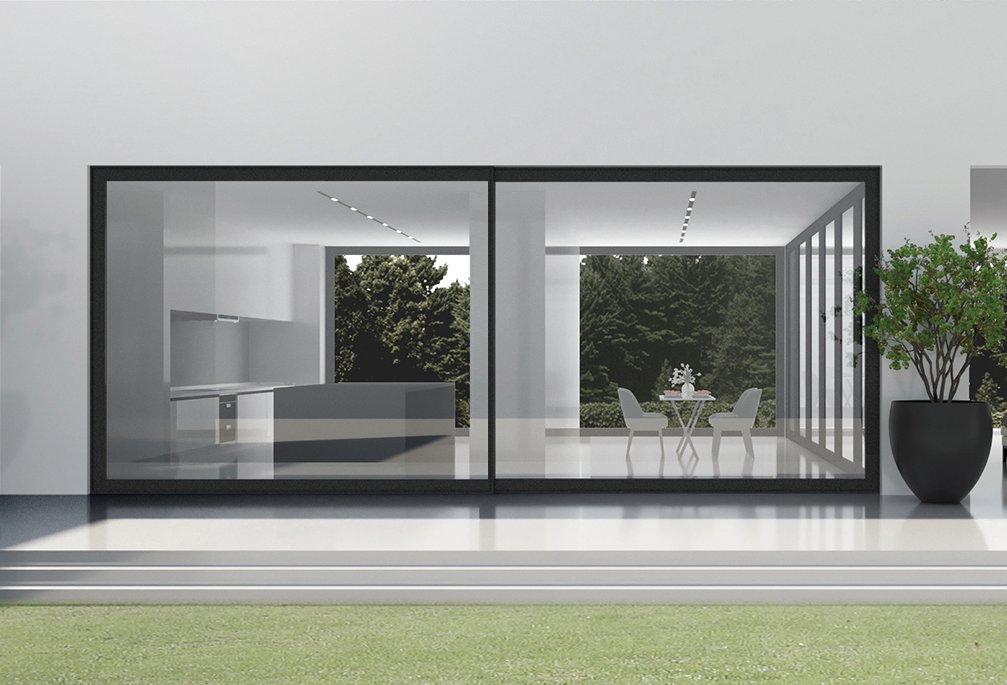
Advanced Multi-Point Locking Mechanics & Hardware Integration
A security door frame is only as dependable as its locking points. We integrate German-engineered G-U, Kinlong, and KSBG hardware platforms featuring top-and-bottom vertical shoot bolts, anti-saw hardened steel deadbolts, and multi-point perimeter hooks that lock deep into reinforced frame keeps upon engagement.
Furthermore, concealed hinge pins prevent external tampering, ensuring that even if external hinge knuckles are subjected to angle-grinder attack, the door panel remains physically locked within the structural outer frame.
Future Procurement Trends in the Global Security Door & Fenestration Market (2025–2030)
As international architectural codes evolve toward stringent decarbonization, net-zero operational energy, and smart home integration, B2B buyers—including developers, general contractors, and hardware importers—are shifting their purchasing criteria. Staying ahead of these market movements is critical for maintaining project ROI and regulatory compliance.
1. Convergence of Thermal Performance & Security
Historically, heavy security doors suffered from poor thermal insulation due to metal thermal bridging. Modern procurement demands Polyamide (PA66) thermal break profiles combined with Low-E triple glazing to achieve U-values under 0.8 to 1.2 W/m²K without compromising burglar resistance.
2. Smart Biometric & IoT Access Integration
The standard key is rapidly being supplemented by motorized multi-point locks compatible with biometrics (fingerprint/facial recognition), encrypted keypads, and building management system (BMS) integration. Procurement contracts now frequently mandate dry-contact relay ports and hidden wiring raceways inside door profiles.
3. Ultra-Large Form Factors & Concealed Frames
High-end residential trends prioritize floor-to-ceiling pivot and sliding security doors with heights exceeding 3.5 meters. Manufacturing plants must utilize high-tensile 6063-T6 aluminum alloys and precision stainless steel pivot rollers to guarantee effort-free manual operation across 400kg+ leaves.
Factory OEM/ODM Capabilities & Manufacturing Excellence
As a leading supplier with over 15 years of dedicated fenestration manufacturing, our facility provides comprehensive end-to-end production control—from raw aluminum billet extrusion and anodizing to automated CNC milling, IGU glass sealing, and final factory bench testing.
Shop Drawing & Submittal Support
Our in-house engineering squad produces detailed CAD elevations, structural mullion calculations, wind-load analysis reports, and cross-sectional details for architect approval and local building permit compliance.
Custom Tolerances & Opening Schedules
Instead of restricting projects to standard modular sizes, every door frame and window sash is cut within a strict ±1 mm tolerance based on your project opening schedule, minimizing on-site shim packs and installation labor.
Container-Ready Export Packaging
Products are wrapped in protective polyethylene film, corner-protected, packed in heavy-duty fumigated wooden A-frames, and labeled with opening-by-opening barcode tracking for streamlined site handling.
CE Certified Security Door & Window System Technical Benchmark
Quick reference guide for project specification, engineering compliance, and tender documentation.
| Product Category | Frame Depth / Wall Thickness | Security Rating (EN 1627 / ANSI) | Glazing Build-Up | Thermal Transmittance (U-Factor) |
|---|---|---|---|---|
| Armored Security Entrance Door | 102 mm / 2.0 mm Profile Wall | EN 1627 RC3 / RC4 Rated | 5 Low-E + 12A + 5 Double Tempered | U ≤ 1.2 W/m²K |
| Thermal Break Casement Window | 67 mm – 78 mm / 1.6 mm Profile | Multi-Point Locking RC2 | 6 Low-E + 12Argon + 6 Tempered | U ≤ 0.28 BTU/h·ft²·°F |
| Heavy-Duty Architectural Pivot Door | 100 mm / 2.0 mm Profile Wall | ANSI/BHMA Grade 1 Multi-Point | 8 Laminated + 12A + 8 Tempered | U ≤ 1.4 W/m²K |
| European Tilt & Turn Window System | 67 mm – 78.3 mm / 1.6 mm Wall | RC2 / RC3 Perimeter Locking | Triple Glazed (5 Low-E + 9A + 5 + 9A + 5) | U ≤ 0.22 BTU/h·ft²·°F |
| Commercial Glass Wall & Storefront | 150 mm Structural Mullion | Impact Rated / TAS 202 Option | 10 Structural Double Tempered IGU | Custom Engineered |
Frequently Asked Questions: Security Door Procurement & Compliance
Addressing core technical questions from architects, developers, and compliance officers.
Request Official Product Catalog & OEM Factory Pricing
Partner directly with a certified manufacturer for your upcoming architectural projects, commercial tenders, or distribution supply chains.