Wholesale Sash & Casement Window Solutions
Certified thermal-break aluminum and engineered UPVC window systems engineered for global distributors, commercial developers, and architectural specifiers.

Soundproof Energy Saving Swing Double/Triple Glazed Aluminum Casement Windows
Engineered for high-end apartments and passive houses with multi-cavity thermal break profiles, acoustic laminated glazing, and German multi-point locking.
Contact Us
Modern Soundproof UPVC Casement Windows Double Glazed Vinyl Profile
EU Standard vinyl window featuring high-impact UV-stabilized UPVC frames, fusion-welded corners, and argon-filled Low-E insulated glass units.
Contact Us
Slim Frame Minimalist Thermal Break Aluminum Window
Ultra-narrow sightline architectural swing window with concealed hinges, heavy-duty stainless steel mesh friction stays, and high DP structural ratings.
Contact Us
Beigeman Modern Double Glazed Aluminium Casement Windows
Precision-machined residential villa fenestration with tempered safety glass, powder-coated finish options, and superior air-water tightness seals.
Contact Us
Heavy Duty 86 Series Commercial Aluminum Window System
Large section 798 type frame engineered for luxury villas and high-rise commercial structures requiring structural wind load deflection resistance.
Contact Us
DERCHI Bespoke Thermal-Break Energy Efficient Window
Custom-fabricated architectural window platform incorporating PA66 polyamide thermal barriers and warm-edge spacers for extreme energy code compliance.
Contact Us
Double Glazed Aluminum Alloy Swing Window System
High-performance fenestration system featuring continuous EPDM gasket lines, dual-seal insulated glass units, and custom RAL architectural colors.
Contact Us
Rogenilan Premium Double/Triple Glazed Dual-Action Window
Multi-functional tilt-and-turn or awning swing window with integrated stainless security mesh screens and European GU drive gear hardware.
Contact UsChina Sash Windows Manufacturing Ecosystem & Global Sourcing Analysis
An engineering-grade analysis for architectural specifiers, general contractors, commercial developers, and window importers seeking strategic OEM/ODM partnerships in China.
Navigating the global supply chain for high-performance fenestration products requires a detailed understanding of material science, structural engineering, hardware physics, and international compliance standards. China has established itself as the world's primary manufacturing hub for architectural aluminum windows, UPVC profiles, and custom vertical sliding sash window assemblies. However, for international buyers—ranging from North American builders seeking NFRC-certified thermal-break sash windows to Australian developers requiring AS2047-compliant double-hung units—selecting the right manufacturer requires evaluated technical rigor.
Sash windows, traditionally defined by vertically or horizontally sliding operable panels (sashes), represent one of the most mechanically demanding window typologies. Unlike standard casement windows that compress simple EPDM bulb gaskets against a fixed rebate upon closure, sash windows rely on continuous sliding seals, counterbalancing mechanisms, and structural meeting rails that must withstand severe wind load pressure while maintaining smooth, low-friction operation over thousands of duty cycles.
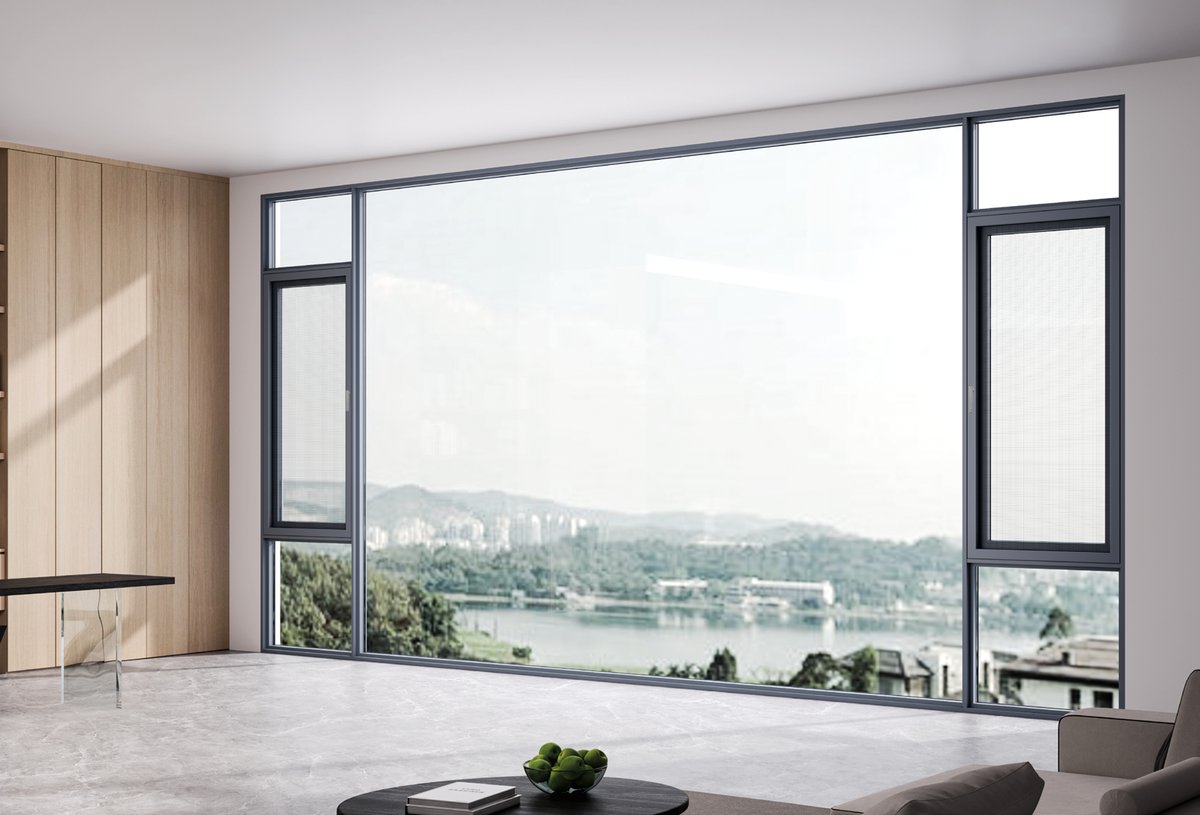
1. The Mechanical & Structural Engineering of Modern Wholesale Sash Windows
When sourcing wholesale sash windows from Chinese factories, technical specifiers must evaluate three core engineering pillars: structural profile alloy composition, thermal barrier technology, and mechanical counterbalance mechanism integrity.
A. Aluminum Extrusions vs. High-Impact UPVC Formulations
Modern wholesale window manufacturing in China utilizes two primary structural substrates for sash window construction:
- Architectural Aluminum Alloy (6063-T5 / 6063-T6): Premium Chinese factories utilize primary billet 6063 aluminum alloy subjected to artificial age hardening (T5 or T6 temper). With tensile strengths exceeding 185 MPa, 6063-T5 profiles permit ultra-slim sightlines without compromising structural deflection resistance (L/175 or L/240 design limits). This structural rigidity is critical for large-format vertical double-hung sash windows installed in coastal or high-wind zones.
- Multi-Cavity UV-Stabilized UPVC: Unplasticized Polyvinyl Chloride profiles engineered for export undergo rigorous compounding with titanium dioxide (TiO2 ≥ 4.5 parts per hundred resin) to prevent solar yellowing and embrittlement. Modern UPVC sash profiles feature 5-to-7 internal chamber configurations reinforced with galvanized steel liners (1.5mm to 2.0mm wall thickness), offering exceptional structural stability combined with inherent thermal non-conductivity.
B. Thermal Barrier Architecture: Polyamide PA66-GF25 Struts
Standard aluminum profiles exhibit high thermal conductivity (k ≈ 200 W/m·K). To meet strict modern energy building codes (such as ASHRAE 90.1, IECC, and European EPBD standards), leading Chinese wholesale sash window manufacturers integrate advanced Thermal Break Technology. This process mechanically crimps structural Polyamide PA66 reinforced with 25% glass fiber (PA66-GF25) between the interior and exterior aluminum extrusions.
PA66-GF25 matches the coefficient of thermal expansion of aluminum alloy, preventing structural delamination under extreme ambient temperature differentials. By introducing a 24mm to 34mm multi-cavity polyamide thermal barrier filled with low-density polyurethane foam or aerogel insulation, thermal conductivity across the window frame is reduced to below 1.6 W/m²·K, enabling overall window U-factors as low as 0.22 to 0.28 BTU/h·ft²·°F.
Information Gain Key Insight: Preventing Thermal Bridging in Double-Hung Sash Windows
A critical engineering failure point in cheap sash windows occurs at the interlock or meeting rail where the upper and lower sashes meet. High-end Chinese manufacturers solve this thermal bridge by installing interlocking polyamide thermal strips paired with triple-layer pile weather-stripping embedded with continuous fin seals (fin-pile weather-seal). This blocks convection drafts and water penetration under high dynamic pressure testing.
C. Counterbalance Mechanics: Constant Force Springs vs. Spiral Balances
The operational lifespan of a vertical double-hung sash window depends directly on its counterbalance mechanism. Leading Chinese export manufacturers offer three distinct balance platforms engineered for specific panel weight classes:
- Constant Force Coil Spring Balances: Utilizing heavy-gauge stainless steel coil springs housed in modular plastic cassettes, constant force balances provide uniform lifting force regardless of sash position. Rated for over 25,000 operational cycles, they are ideal for residential and light commercial sash weights up to 40 kg per sash.
- Heavy-Duty Spiral Balances: Utilizing an internal twisted steel rod rotating within a grease-lubricated tube under spring tension, adjustable spiral balances allow field calibration of operating forces. They excel in medium-to-heavy sash applications and historic replication projects.
- Block & Tackle Systems: Combining extension springs with high-density nylon pulleys and aircraft-grade steel cables, block-and-tackle balances handle oversized architectural glass units weighing up to 75 kg per operable sash with effortless fingertip control.
2. Enterprise Advantages & Manufacturing Capabilities
Partnering with an established Chinese fenestration manufacturer offers distinct technical and economic advantages for international buyers, provided the factory operates under strict quality management systems (ISO 9001:2015).
300+ Tons Profile Raw Inventory
Extrusion profile inventory held in standard architectural finishes (Anodized Matte, Fluorocarbon PVDF Spraying, Woodgrain Sublimation, and RAL Powder Coating) enables immediate production startup upon shop drawing sign-off.
Third-Party International Testing
Full compliance documentation including Intertek testing reports, NFRC thermal ratings (U-Factor, SHGC, VT, AIR), NAFS structural performance ratings, and Australian AS2047 / AS1288 accreditation.
German & Global Hardware Brands
Precision integration with world-renowned hardware manufacturers including German G-U (Gretsch-Unitas), Siegenia, Hoppe, and HK Kinlong multi-point drive gear systems, backed by published cycle test warranties.
100% Made-to-Measure Tolerances
Bespoke CNC fabrication operating to ±1.0mm opening tolerances. Structural elevation drawings, section details, and anchoring schedules provided for fast local municipal permit approvals.
Export Container-Ready Packaging
Fully fully-protected A-frame steel crating, individual foam edge-wrapping, moisture-barrier shrink wrap, and barcoded opening-by-opening packing lists for smooth job site offloading.
Acoustic & Solar Glazing Engineering
In-house insulated glass unit (IGU) assembly incorporating double or triple tempered Low-E glass, argon gas injection (≥90% fill rate), warm-edge structural spacers, and PVB acoustic laminates.
3. Comprehensive Fenestration Technical Specification Matrix
To assist architects and procurement professionals in matching window platforms to specific building requirements, the table below outlines structural, acoustic, and thermal performance values across our export range:
| Window Series / Typology | Profile Frame Depth | Thermal Barrier | Standard Glazing Build-Up | U-Factor (W/m²·K) | Acoustic STC Rating | Design Pressure (DP) |
|---|---|---|---|---|---|---|
| 120T Double-Hung Sash Window | 122 mm | 24mm PA66 Polyamide | 5mm Low-E + 12A + 5mm Tempered | 1.4 – 1.7 | 34 – 38 dB | DP 50 / TAS 202 |
| 67T Thermal Break Casement | 67 mm | 20.8mm PA66 Polyamide | 6mm Low-E + 12A + 6mm Tempered | 1.5 – 1.8 | 32 – 36 dB | DP 55 |
| 78T Ultra-Silent Casement Window | 78.3 mm | 34mm Multi-Cavity PA66 | 5mm Low-E + 16A + 5mm + 12A + 5mm | 0.9 – 1.2 | 38 – 42 dB | DP 65 |
| 82T Horizontal Sliding Window | 78.6 mm | 18mm Polyamide Strip | 5mm Low-E + 9A + 5mm Tempered | 1.8 – 2.1 | 28 – 32 dB | DP 40 |
| 100T Heavy Awning Storm Window | 100 mm | 28mm Reinforced PA66 | 6mm Laminated + 12A + 6mm Low-E | 1.3 – 1.6 | 36 – 40 dB | DP 70 (Impact Rated) |
| 150T Structural Glass Wall / Fixed | 150 mm | 34mm Aerogel Filled PA66 | 8mm Low-E + 16A + 8mm Structural | 0.8 – 1.1 | 40 – 45 dB | DP 80 |
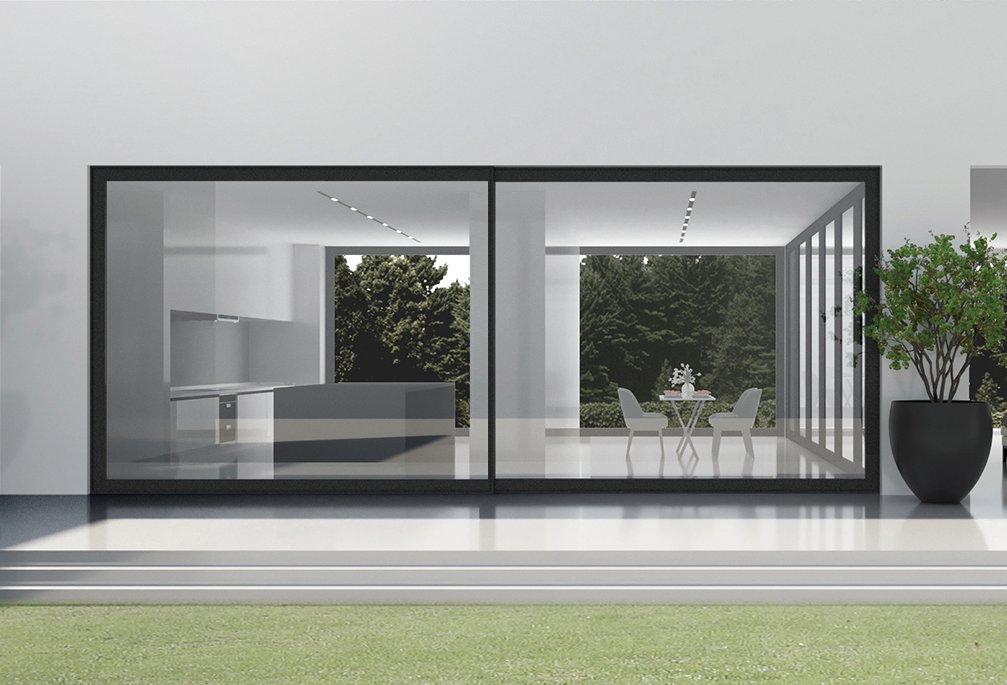
4. Future Global Procurement Trends (2026–2030 Forecast)
The global fenestration market is undergoing a rapid transition driven by stringent carbon neutrality mandates, evolving building codes, and architectural preferences for modern minimalist aesthetics. B2B buyers sourcing from China must align their sourcing strategies with four dominant macro trends:
Trend 1: Adoption of Vacuum Insulated Glass (VIG)
While triple-pane argon-filled IGUs have historically dominated low-energy building design, their weight and thickness (up to 44mm) place heavy mechanical stress on sash balance mechanisms. Vacuum Insulated Glass (VIG) utilizes a microscopic 0.2mm vacuum chamber between two glass panes, achieving center-of-glass U-values as low as 0.60 W/m²·K (U-0.10) in a slim 8.3mm profile. Forward-thinking Chinese factories are now integrating VIG into thermal-break sash frames, reducing panel weight by 45% while exceeding Passive House standards.
Trend 2: Ultra-Slim Sightlines with Structural Bonded Glazing
Modern architectural language favors ultra-narrow frames that maximize natural day lighting. Traditional mechanically beaded windows are being superseded by structural silicone glazing (SSG) techniques. By structurally bonding the insulated glass unit directly to the aluminum sash frame using high-modulus structural sealant, the glass unit becomes a load-bearing element. This engineering advancement allows profile sightlines to be reduced to under 35mm while increasing wind-load resistance and resisting frame racking over time.
Trend 3: Smart Fenestration & Automated Micro-Ventilation
The integration of Building Management Systems (BMS) with residential home automation is accelerating demand for motorized sash operators. Electric chain actuators and linear motorized balances, hidden entirely within the frame head or jamb profiles, allow automatic vertical opening for natural night-purge cooling. Integrated rain sensors automatically close upper sashes during storm events, while air-quality CO2 monitors trigger subtle trickle ventilation without compromising home security.
Trend 4: Embodied Carbon Transparency & EPD Certification
Leading international developers now evaluate window suppliers based on total lifecycle carbon footprint. Tier-1 Chinese manufacturers are securing Environmental Product Declarations (EPDs) verified by international bodies. Utilizing hydro-powered primary aluminum smelters and recycled aluminum scrap (post-consumer recycled content > 75%) significantly lowers the embodied carbon of exported fenestration, granting valuable LEED v4 and BREEAM credits to global project owners.
Frequently Asked Questions for B2B Importers & Specifiers
Technical clarity on minimum order quantities, compliance documentation, custom engineering, and international shipping logistics.
Request a Custom Technical Engineering Quotation
Partner directly with China's leading wholesale window manufacturers. Send your project drawings, opening schedules, or specifications to receive factory-direct pricing within 24 hours.
Contact Us