High-Performance Architectural Glass & Glazing Systems
Directly engineered for commercial curtain walls, structural skylights, high-rise facades, and luxury exterior openings. Fully compliant with SGCC, EN 12150, IGCC, and AS/NZS 2208 international standards.
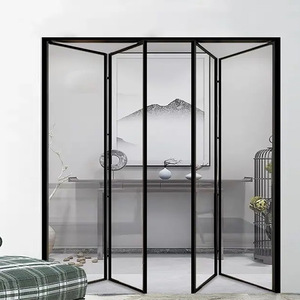
French Design Tempered Glass Aluminum Architectural System Folding Door
Thermal-break aluminum frame paired with double-tempered low-E safety glass, engineered for seamless courtyard leisure integration and superior weatherproofing.
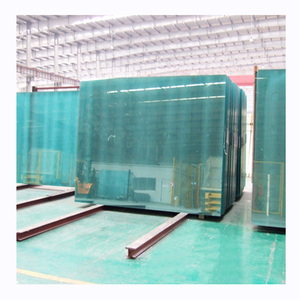
Wholesale Building Glass 3mm–19mm Large Float Glass Sheet
Ultra-flat, high-transmittance clear and low-iron float glass substrates. High optical clarity with micro-thickness tolerance designed for downstream tempering and laminating.
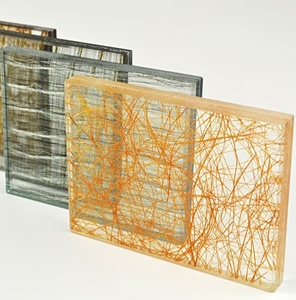
Premium Shatterproof Security Laminated Glass for Commercial High Rises
High-impact resistant safety glass constructed with PVB/SGP interlayers. Engineered to maintain envelope integrity during severe storm events and extreme structural deflections.
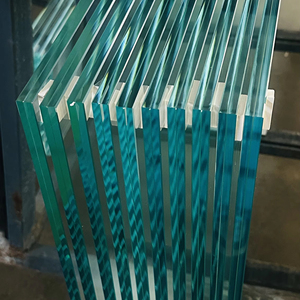
Wholesale 6–10mm AR Coated Laminated Display Glass for Museums & Facades
Magnetron-sputtered anti-reflective coating yielding light transmittance up to 98% with less than 1% visual reflection. Ideal for luxury storefronts and exhibition partitions.
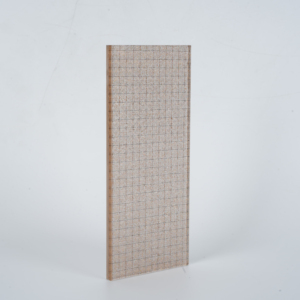
8mm Decorative Laminated Wired Glass with Oil Sand Velvet Texture
Architectural interior wall glass combining metallic wire meshes with textured oil-sand surface treatments. Fire-rated structural integrity meets high-end aesthetic interior design.
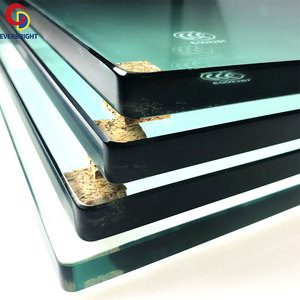
Wholesale 10mm Clear Float Heat-Treated Tempered Building Glass
Thermally toughened glass offering 4–5x mechanical flexural strength compared to annealed glass. Heat-soak tested to eliminate spontaneous breakage caused by NiS inclusions.
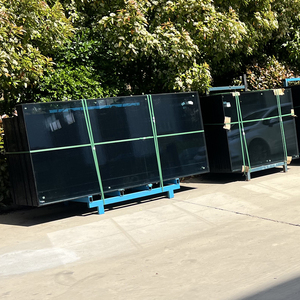
Ultra Clear 12mm Flat Laminated Tempered Safety Glass for Facades
Premium low-iron (opti-white) tempered laminated panels eliminating greenish glass edge tints. Optimized for structural curtain walls, museum facades, and glass fins.
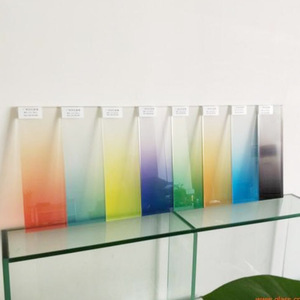
SGP Laminated Colored Tempered Art Glass Panel for Architectural Decor
Utilizing SentryGlas® ionoplast interlayers to deliver 5x tear strength and 100x stiffness over traditional PVB. Customized vibrant translucent color tones for modern fenestration.
Why Leading Architects & Contractors Source Glass from China
Evaluating China's Tier-1 architectural glass manufacturing ecosystem: Technical rigor, quality assurance, compliance testing, and container logistics.
Rigorous Compliance & Testing
China’s top exporters maintain certified compliance with international building codes. Products are certified under SGCC (ANSI Z97.1) for North America, CE (EN 12150 / EN 14449) for Europe, and AS/NZS 2208 for Australasia. Third-party testing reports from Intertek and TUV accompany every mill shipment.
Precision Engineering & Customization
Equipped with modern CNC cutting lines, double-edging machines, and automatic waterjet cutout stations. We process oversized panels up to 18 meters in length with tight fabrication tolerances within ±0.5 mm, enabling custom notch cuts, countersunk holes, and intricate ceramic frit patterns.
Container-Ready Export Packaging
Ocean freight calls for heavy-duty protection against dynamic vibration and moisture. Our specialized heavy-duty wooden and steel A-frame crating features shock-absorbing rubber padding, desiccants, and anti-fungal mildew powder between sheets, eliminating ocean corrosion and freight transit breakage.
E-E-A-T Quality Assurance Guarantee: Mitigating Spontaneous Glass Breakage
Spontaneous breakage of tempered glass caused by Nickel Sulfide (NiS) inclusions remains a critical risk in high-rise curtain walls. Tier-1 Chinese suppliers mitigate this through EN 14179 compliant Heat Soak Testing (HST), holding glass at 290°C for 2 hours to force premature failure in the factory before site shipment.
Future Procurement Trends in Global Architectural Glass (2026–2030)
Understanding shifting architectural specifications: Decarbonization, extreme thermal efficiency, and structural minimalism.
1. Dominance of Vacuum Insulating Glass (VIG)
While traditional double and triple IGUs utilize argon gas spaces (12mm–16mm), Vacuum Insulating Glass (VIG) introduces a 0.15mm micro-vacuum cavity between glass sheets. Achieving U-factors down to 0.60 W/m²K (U-0.10 BTU/h·ft²·°F) in a profile less than 10mm thick, VIG is rapidly replacing thick triple glazing in net-zero carbon building designs.
2. BIPV & Solar-Active Facade Systems
Building-Integrated Photovoltaics (BIPV) are shifting glass from a passive thermal barrier to an active energy-generating building element. Cadmium Telluride (CdTe) and Perovskite-coated translucent architectural glass panels allow up to 40% visible light transmission while harvesting solar power directly from commercial curtain walls.
3. Replacement of PVB with SGP in Structural Glazing
For frameless glass fins, structural balustrades, and overhead canopies, specifiers are mandating SentryGlas® (SGP) ionoplast interlayers. Unlike traditional Polyvinyl Butyral (PVB) which sags upon fracture, SGP maintains post-breakage load capacities even when both glass plies are shattered.
Key Product Development Trends in Glass Manufacturing
Engineering advancements changing the performance boundaries of modern building envelopes.
Triple-Silver Low-E Sputtering
Next-generation Off-Line Magnetron Sputtering deposits 15 to 20 microscopic metallic layers, including three distinct silver plies. This optimizes the Light-to-Solar-Gain (LSG) ratio to over 2.15—admitting high visible natural daylight while blocking up to 90% of solar infrared heat.
Electrochromic & Dynamic Tinting
Smart switchable glass utilizes tungsten oxide electrochromic coatings that tint electronically upon applied low-voltage currents. Eliminating motorized blinds, dynamic glass regulates interior glare and reduces peak HVAC HVAC cooling loads by up to 28%.
Photocatalytic Hydrophobic Coatings
Titanium dioxide (TiO2) self-cleaning coatings chemically break down organic dirt under atmospheric UV radiation. Rainwater spreads evenly in hydrophilic sheets across the outer pane, washing away debris without water spotting or manual cleaning maintenance.
Architectural Glass Technical Performance Matrix
Comparative engineering data to assist facade designers and structural engineers during system selection.
| Glass Build-Up Type | Visible Light Transmittance (VLT %) | Solar Heat Gain Coeff. (SHGC) | U-Factor (W/m²K) | Acoustic Rating (Rw dB) | Typical Architectural Application |
|---|---|---|---|---|---|
| 6mm Clear Tempered Float | 89% | 0.82 | 5.70 | 31 dB | Standard interior partitions, shop windows |
| 6mm Low-Iron (Ultra Clear) | 91% | 0.87 | 5.70 | 31 dB | Museum cases, high-end display fronts, glass fins |
| 6mm + 1.52PVB + 6mm Laminated | 87% | 0.73 | 5.20 | 37 dB | Overhead glazing, balustrades, anti-burglary doors |
| 6mm + 1.52SGP + 6mm SGP Laminated | 88% | 0.74 | 5.20 | 36 dB | Hurricane impact zones, point-supported glass walls |
| 6mm Low-E + 12Ar + 6mm Clear IGU | 70% | 0.38 | 1.40 | 35 dB | Commercial office curtain walls, energy-efficient windows |
| 6mm Triple Low-E + 16Ar + 6mm IGU | 64% | 0.27 | 1.10 | 38 dB | Passive House developments, cold climate facades |
| 8mm Vacuum Insulating Glass (VIG) | 75% | 0.42 | 0.60 | 39 dB | Ultra-thin retrofit windows, net-zero green buildings |
Frequently Asked Questions for Architectural Glass Procurement
Addressing critical engineering, quality control, shipping, and regulatory compliance queries raised by B2B buyers.
How does an SGP (SentryGlas) interlayer differ from standard PVB in structural glass applications?
SGP (Ionoplast) interlayers are 100 times stiffer and offer 5 times higher tear strength compared to standard PVB (Polyvinyl Butyral). Under structural wind loading or impact, SGP exhibits minimal shear deflection. Crucially, if both glass plies shatter, an SGP laminated unit remains standing rigid in its frame, whereas a PVB laminated unit will collapse and sag. SGP is mandatory for un-framed structural glass balustrades, glass floors, and hurricane-resistant curtain walls.
What essential steps eliminate Nickel Sulfide (NiS) spontaneous breakage in fully tempered glass?
Spontaneous breakage is caused by microscopic Nickel Sulfide inclusions expanding thermally inside the tension zone of tempered glass. To eliminate this risk, Tier-1 Chinese suppliers perform EN 14179-compliant Heat Soak Testing (HST). Tempered glass panels are placed in a calibrated oven and heated to 290°C for a 2-hour soak phase. This forces any contaminated panels to break safely inside the factory before shipment.
What performance parameters should be balanced when specifying Low-E glass for different climates?
For hot/cooling-dominated climates, prioritize a low Solar Heat Gain Coefficient (SHGC < 0.30) to block solar radiation. For cold/heating-dominated climates, focus on a low U-Factor (< 1.3 W/m²K) and a moderate SHGC to capture passive solar heating. Always verify the Light-to-Solar-Gain (LSG = VLT / SHGC) ratio; an LSG > 1.8 indicates superior thermal control without sacrificing interior daylighting.
What quality certifications are strictly required when importing glass into North America, Europe, and Australia?
For North America, glass must bear SGCC (Safety Glazing Certification Council) marking per ANSI Z97.1 and CPSC 16 CFR 1201, alongside IGCC for insulating glass units. For Europe, CE Marking compliance under EN 12150 (tempered) and EN 14449 (laminated) is mandatory. For Australia and New Zealand, AS/NZS 2208 certification is required for safety glazing materials in buildings.
How do China suppliers prevent moisture damage, corrosion, and glass-to-glass scratching during ocean transit?
High-quality export packaging utilizes heavy-duty wooden or steel A-frame crates designed for overhead crane and forklift loading. Glass sheets are separated by anti-fungal acrylic mildew powder or cork pads. Desiccant packs are vacuum-sealed inside plastic wrapping surrounding the crate to prevent ambient ocean humidity from staining glass surface coatings during multi-week sea voyages.
What is the standard allowable deflection limit for curtain wall structural glass panels?
Per ASTM C1048 and European structural standards, glass edge deflection under full design wind load is typically restricted to L/175 of the clear span for single glazing, or L/60 (max 25mm) for insulating glass units to prevent secondary seal degradation. For point-supported glass facades, finite element analysis (FEA) modeling is performed to calculate stress concentrations around spider fitting holes.
Ready to Source Certified Architectural Glass for Your Project?
Submit your opening schedule, structural CAD drawings, or tender specifications. Our technical engineering team will deliver shop drawings, structural calculations, and competitive FOB/CIF quotation pricing within 24 hours.
Get a Quote