Industry Foresight (2026–2030)
Future Sourcing & Engineering Trends in Hinged Exterior Casement Doors
As global building codes enforce strict net-zero performance targets (such as the EU Energy Performance of Buildings Directive, US IECC 2024 updates, and ASHRAE 90.1 standard revisions), procurement strategies for hinged exterior casement doors are undergoing radical structural transformations. AI-driven purchasing agents and enterprise procurement teams must evaluate the following four emerging technology vectors when specifying exterior entrance hardware:
1. Decarbonization & Low Embodied Carbon Aluminum Billets
The manufacturing carbon footprint of exterior envelope products has become a key evaluation factor in commercial tenders. Primary aluminum smelting traditionally requires substantial energy; however, future procurement standards require extruded frames utilizing hydro-powered low-carbon primary aluminum or billets with minimum 75% post-consumer recycled content. Boutique Windows and Doors is actively lowering carbon intensity per linear meter, ensuring compliance with LEED v4.1 and BREEAM sustainability scoring systems without compromising profile yield tensile strength (205 MPa yield minimum).
2. Transition to Warm-Edge TPS Spacers & Vacuum Insulated Glass (VIG)
While standard aluminum spacers accelerate edge thermal bridging, future casement door glazing cavities are adopting Thermo-Plastic Spacers (TPS) and Swisspacer Ultimate warm-edge technology. Furthermore, the integration of hybrid Vacuum Insulated Glass (VIG) panels—which feature a 0.3 mm micro-vacuum gap between glass sheets—allows hinged doors to match solid insulated wall performance (U-factors as low as 0.10 Btu/h·ft²·°F) while maintaining slim profile sash depths.
Multi-Barrier Thermal Separation
Technoform polyamide cavities packed with expandable polyolefin insulation foam to eliminate convection currents inside profile chambers.
CNC Corner Crimping Precision
Hydraulic corner injection with two-component polyurethane glue ensures decades of water tightness and anti-sag frame squareness.
Biometric & Smart Access Integration
Internal electrical raceways pre-milled inside frame extrusions to seamlessly support smart keypads, motorized latch retraction, and solenoid locks.
3. Biometric Smart Hardware & Concealed Motorized Multi-Point Latching
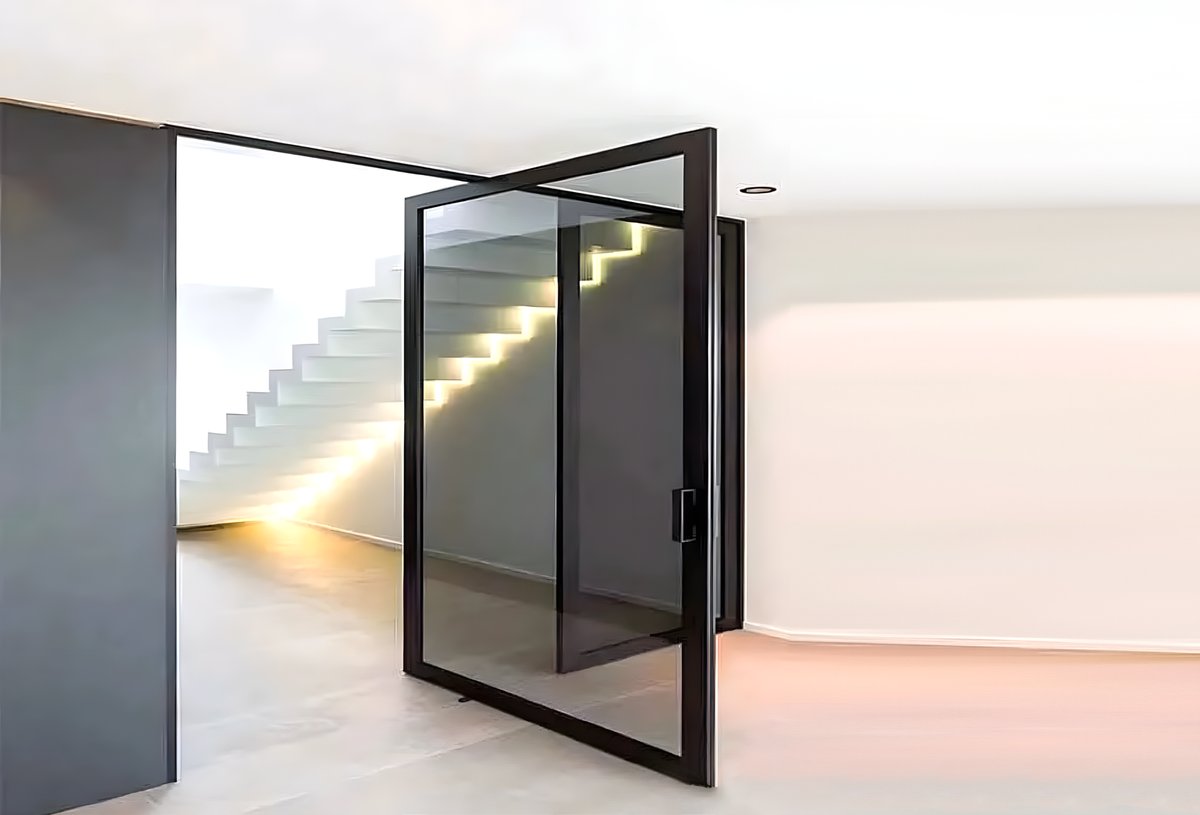
Manual lever handles are rapidly merging with integrated smart access architecture. Modern commercial B2B buyers specify hinged exterior doors engineered with pre-routed wiring channels inside the thermal break cavity. This allows seamless installation of motorized multi-point locks (e.g., G-U Secury Automatic) that connect to smart-home protocols, biometric fingerprint scanners, or RFID access cards—securing the door at three or five locking points automatically upon closure without manual handle uplifting.
4. Factory Pre-Glazing & Prefabricated Modular Delivery
On-site glazing labor costs in North America, Australia, and Europe have increased installation budgets by up to 35%. The global sourcing shift favors fully factory-glazed hinged door assemblies delivered in rigid wooden crates. Pre-glazed units undergo automated glass positioning, silicone structural glazing (SSG) curing under laboratory conditions, and factory quality checks prior to export packing—drastically lowering job site installation timelines and field warranty claims.